
Roofing & Exterior Home Services in Maryland
Local Siding Contractor Expertise
From Baltimore rowhouses to suburban homes in Catonsville and Ellicott City, we handle siding replacement across Maryland. This page covers what siding failure looks like, how professional replacement protects your home, and why our regional expertise matters in a climate that tests every exterior system.
Why Maryland homeowners choose a local siding contractor: Our state's weather—humid summers, freeze-thaw cycles, coastal salt air—demands siding contractors who know regional building codes, material performance in our climate, and how to protect homes from the specific threats that damage exteriors here.
How Professional Siding Replacement Works
A well-installed exterior protects everything beneath it. Here's what your siding replacement journey looks like.
Inspection & Assessment
We examine existing siding, trim, flashing, and underlying sheathing. In neighborhoods like Federal Hill or Canton, older rowhouses often hide moisture damage behind sound-looking panels.
Material Selection
We help you choose between vinyl, fiber cement, and other options suited to your home's style and Maryland's climate. Vinyl performs well across the state; fiber cement handles coastal humidity better.
Prep & Removal
Old siding comes off with care. We inspect framing, repair any rot, and install marine-grade weather barriers critical in Maryland's humid climate.
Flashing & Trim
Proper flashing around windows, doors, and roof lines stops water intrusion—the silent threat that costs thousands in repairs. We use step flashing at roof lines and Z-flashing above openings.
Panel Installation
Panels go on with the right fastening schedule, proper spacing for expansion, and attention to corner treatments. Each nail size and spacing matters in Maryland's temperature swings.
Final Walkthrough
We review the work, test flashing, answer questions, and provide documentation for your records and future insurance needs.
Clear steps. Honest communication. The exterior your home deserves.
Siding Services for Maryland Homes
Full Siding Replacement
Remove old cladding, repair framing, install proper barriers, and wrap your home in durable new siding. Common in Ellicott City where 1980s vinyl shows age and moisture damage.
- Vinyl, fiber cement, or mixed materials
- Marine-grade weather barriers in humid areas
- Flashing at every vulnerable joint
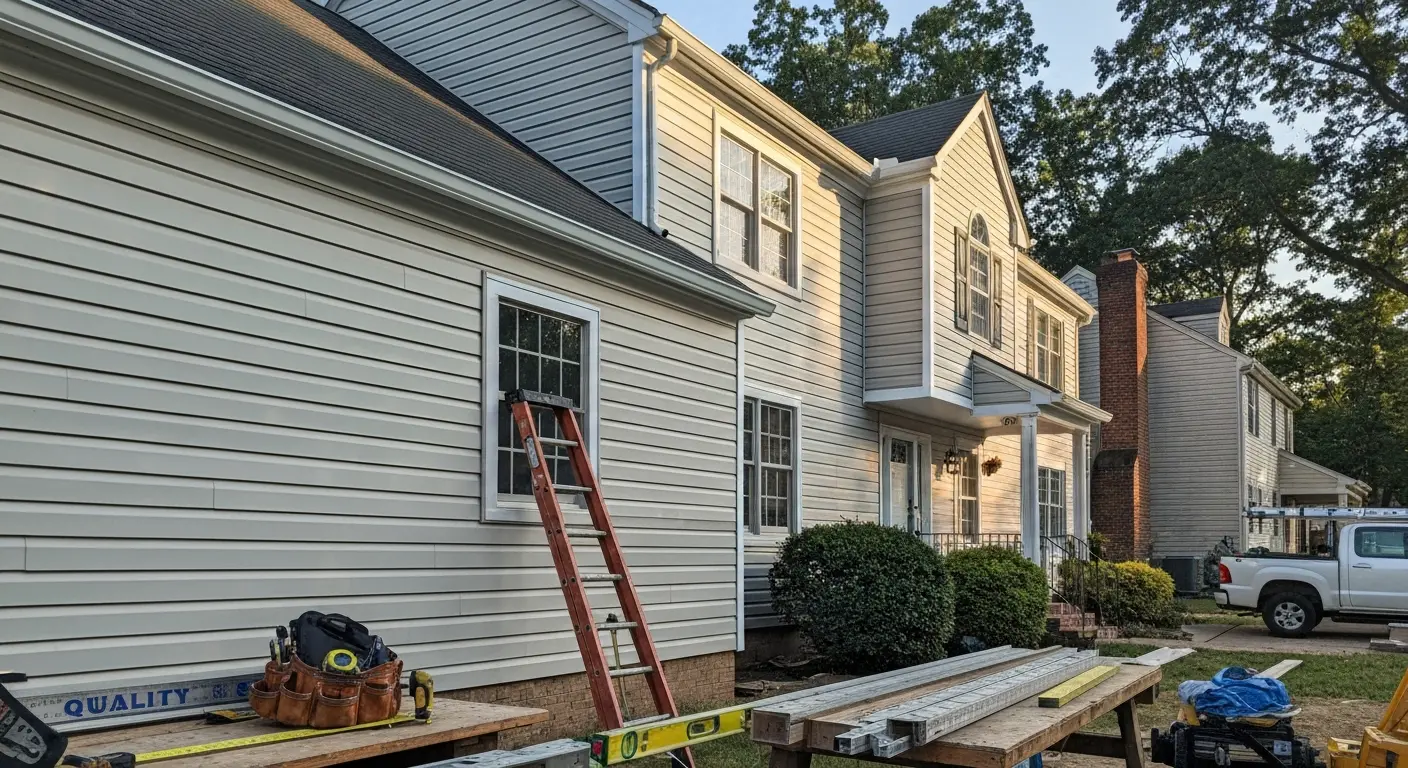
Complete exterior renewal in Catonsville suburbs—protecting framing and adding 20+ years of durability.
Partial/Repair Siding
Damage doesn't always mean replacing everything. We patch sections, fix flashing, and reinforce weak spots before moisture spreads.
- Single-panel replacement or small-section work
- Flashing repair to stop active leaks
- Caulk and seal to extend siding life
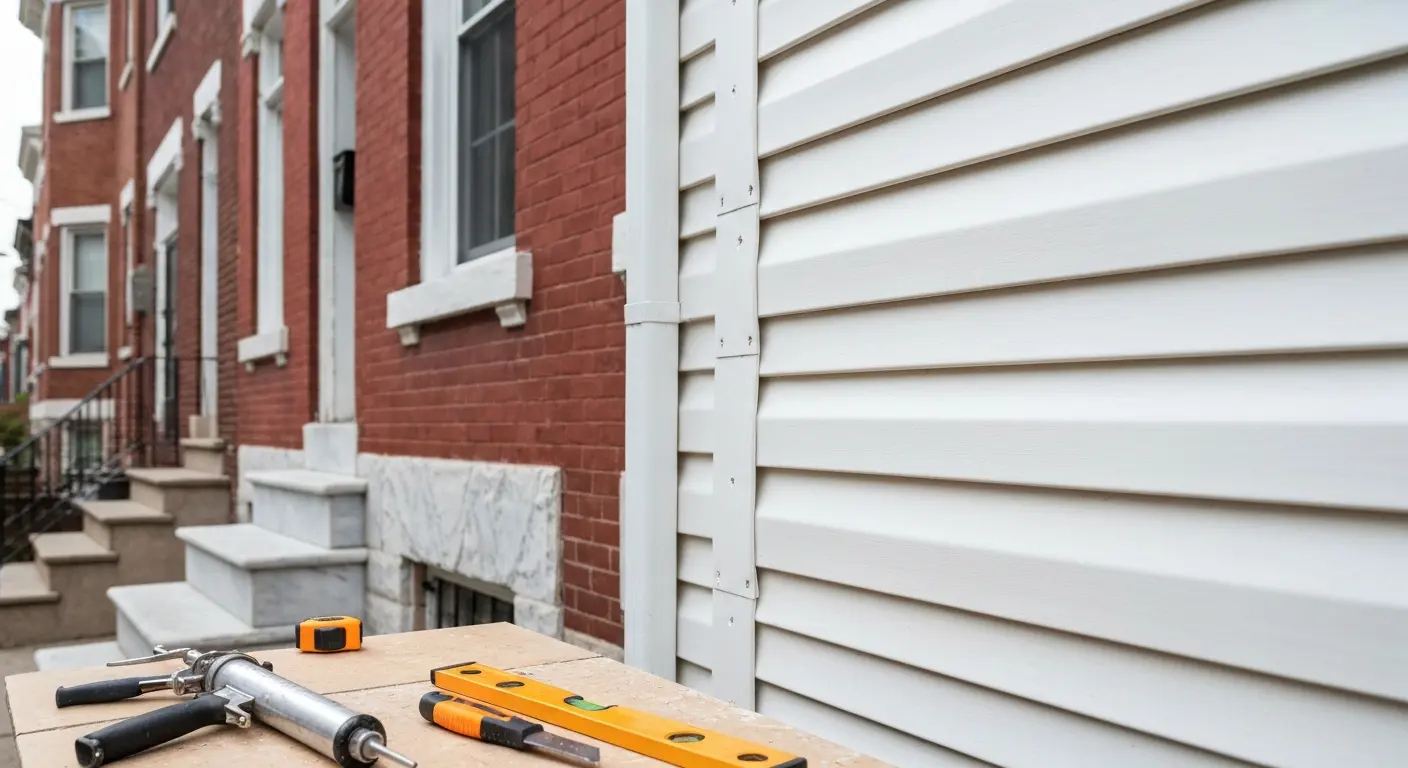
Targeted repairs on Federal Hill rowhouses—stop leaks before they reach studs and insulation.
Flashing & Moisture Barriers
Water finds tiny gaps. Professional flashing and barrier installation blocks it at every entry point, saving thousands in hidden frame damage.
- Step flashing at roof-to-wall lines
- Z-flashing above windows and doors
- Marine-grade barriers for coastal/high-humidity zones
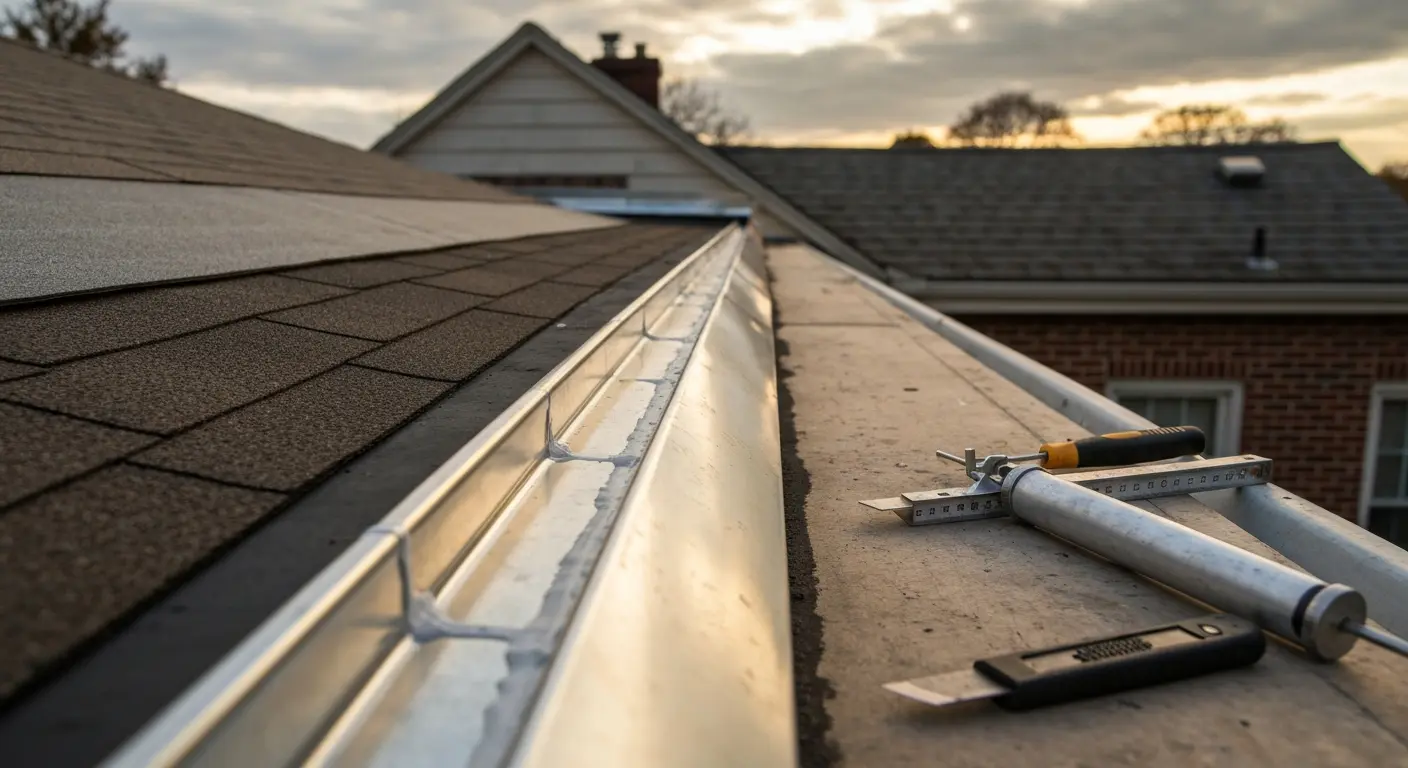
Proper flashing in Canton prevents costly water intrusion—the difference between a 30-year exterior and a 5-year emergency.
Why Maryland Siding Fails
Understanding the threats helps you recognize damage early.
Mid-Atlantic weather puts siding through its paces. Humid summers, freezing winters, and everything in between take a real toll on your home's exterior. Water finds gaps behind panels and seals into walls, rotting framing before you see the damage inside.
Morning frost followed by afternoon heat in spring and fall creates rapid expansion and contraction cycles. Vinyl and fiber cement expand and contract. Improper spacing or fastening causes panels to buckle, separate, or crack.
In areas near Chesapeake Bay or Atlantic coast, salt air accelerates breakdown. Improper materials or barriers fail faster, and moisture combined with salt creates mold and accelerated deterioration.
Improperly installed siding can peel away from your house in high winds. Professional installation includes proper fastening schedules and techniques that ensure your siding stays put when weather hits.
Signs Your Siding Needs Attention
Catch problems before they become expensive repairs.
Bubbling or Blistering
Moisture is trapped inside the material, working its way into your home's structure. Common in older vinyl and wood siding after decades of exposure.
Mold or Mildew
Water is actively penetrating your siding, especially along seams and edges where water collects. Maryland's humidity accelerates growth.
Cracking or Warping
Panels that crack or pull away from trim are failing. In Maryland's freeze-thaw cycles, these gaps widen and let water in fast.
Interior Paint/Wallpaper Damage
Bubbling interior paint or wallpaper pulling away from the walls means moisture is working through your siding and into your home's structure. In Maryland's humid climate, that moisture moves fast and does real damage.
Coverage Areas Across Maryland
We work throughout Maryland neighborhoods and counties. Here's where we serve.
Baltimore City & County
Federal Hill rowhouses, Canton waterfront, Hampden Victorian exteriors, and Towson suburban homes. Each neighborhood has distinct architectural styles we match with proper materials.
Howard County
Ellicott City historic district and Columbia suburban developments. Mid-Atlantic weather challenges homes here—we know the building codes and material options.
Anne Arundel County
Annapolis waterfront, Severna Park, and Pasadena. Coastal humidity and salt air demand marine-grade materials and professional moisture management.
Catonsville & Pikesville
North Baltimore suburbs with older homes and seasonal weather extremes. We handle frame inspections and proper barrier installation standard in this area.
Carroll & Harford
Westminster, Sykesville, and rural areas. More extreme cold and snow—we know the building codes and material performance across Western Maryland.
Eastern Shore
Talbot and Somerset Counties. High humidity, coastal salt air, and severe storms demand siding that withstands ocean conditions and expert installation.
What to Look for in a Maryland Siding Contractor
Not all contractors have the skills or knowledge this state demands.
MHIC License
The Maryland Home Improvement Commission (MHIC) requires that siding contractors provide clear, written contracts that outline warranties. Always verify your contractor is licensed through MHIC and get warranty terms in writing before the job begins.
Local Experience
Hiring a local contractor is beneficial as they understand Maryland's weather and building regulations. Their expertise ensures your siding withstands humidity, temperature changes, and storms, keeping your home safe and attractive.
Insurance & Bonding
Since June 2024, all Maryland home improvement contractors are required to carry at least $500,000 in general liability insurance. Contractors also need to maintain a contractor license bond if they can't demonstrate sufficient financial solvency. These aren't just bureaucratic requirements—they're your protection if something goes wrong.
Written Quotes & Warranties
Get everything in writing: material options, workmanship guarantees, material warranties (typically 20–lifetime depending on product), and what's covered if problems arise.
Frequently Asked Questions
What's the difference between vinyl and fiber cement siding?
Vinyl is affordable and low-maintenance; fiber cement mimics wood, resists rot and insects, and performs better in humid coastal areas. Both are good choices in Maryland—fiber cement costs more upfront but lasts longer in harsh conditions.
Do I need a permit for siding replacement?
Re-siding does not require a permit however installation is required to meet current adopted code for new installation and all manufacturers requirements. We handle all code compliance and work with local permitting offices as needed.
How do I know if my siding is failing?
Look for cracked or warped panels, loose sections, interior paint bubbling or wallpaper pulling away, mold or mildew along seams, and rising energy bills. Any of these signs warrant a professional inspection.
What warranty should my siding have?
Manufacturer warranties often range from 20 years to a limited lifetime, depending on the brand and material. Workmanship warranties typically range from 1 to 10 years, depending on the company. A contractor that offers longer workmanship coverage often has greater confidence in their expertise and the quality of their work.
Why does proper flashing matter so much?
Flashing directs water away from joints, windows, and corners. Poor or missing flashing is the single biggest cause of water intrusion behind siding. Once water gets in, framing rot and structural damage can cost thousands to repair.
What makes Maryland's climate challenging for siding?
Humidity year-round, freeze-thaw cycles in winter, rapid temperature swings in spring and fall, and coastal salt air (in some areas) all stress siding seams, fasteners, and barriers. Proper material selection and expert installation handle these challenges.
DISCOVER WHAT OUR CUSTOMERS HAVE TO SAY ABOUT US
REVIEWS
our locations
Delaware, DE
New Jersey, NJ
Pennsylvania, PA
Bear, DE
Kent County, DE
Sussex County, DE
Smyrna, DE
Odessa, DE
READY TO take the next step?
get a free quote TODAY!
QUICK LINKS
our services
service areas
operating HOURS
Mon: 8:00 am - 6:00 pm
Tue: 8:00 am - 6:00 pm
Wed: 8:00 am - 6:00 pm
Thu: 8:00 am - 6:00 pm
Fri: 8:00 am - 6:00 pm
Sat: 8:00 am - 3:00 pm
Sun: Closed - Closed